
Besides technology, energy communities need trust, time and a reason to act
What makes people decide to produce and share energy together? Technology and financial savings matter, but they are only part of the answer. Building an energy community also requires trust, time, and a reason for people to act together.
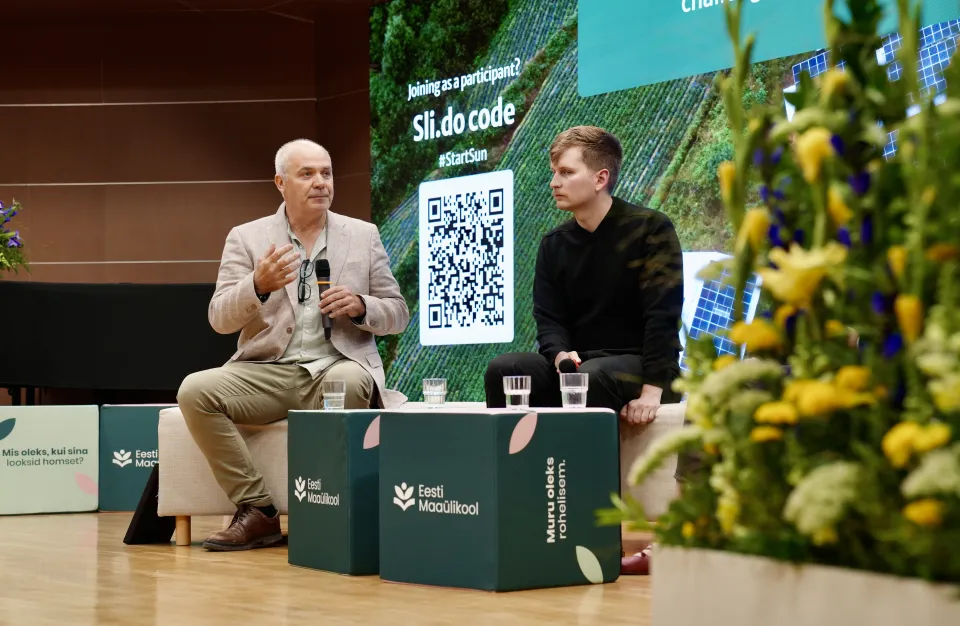
These questions were at the center of the StartSun final conference’s panel discussion “Challenges and solutions for stronger collaborationlink opens in new page”, where Xavier Simón from the University of Vigo, Kirils Gončarovs from Tartu Regional Energy Agency and Uppsala University, and Maie Kiisel from the University of Tartu discussed what helps energy communities take shape in practice and what can prevent them from moving forward.
Throughout the discussion, one message kept returning: an energy community is not created simply by installing solar panels or designing a financially attractive model. Before people can share energy, they need to see why cooperation makes sense and feel that they can rely on the people and institutions involved.
A community needs a reason to act together
Kirils Gončarovs pointed out that a successful energy community often needs a purpose that goes beyond pure economic benefits. Financial savings can motivate people, but shared environmental values, local interests or a desire to achieve something together can provide a stronger foundation for long-term cooperation.
Maie Kiisel added that people also need to feel that they are capable of achieving something together. Trust, complementary skills and a sense of control over the process all play a role. But trust cannot simply be created as a separate project of activity. If it is not there yet, starting with a smaller common task may be more realistic than immediately asking people to commit to a complex energy initiative.
Trust also exists on several levels. Gončarovs noted that people may trust their neighbors while having little confidence in their municipality or other institutions. That can be enough to slow down or stop collective action. Building an energy community therefore means working not only with relationships between residents, but also with the relationship between communities and the organizations around them.
Do not arrive with a suitcase full of solutions
For Xavier Simón, one of the most important ingredients is time.
Experts may understand the technology, but that does not mean they already understand the community. Simón warned against arriving in a local area with what he described as a “suitcase full of solutions” and then looking for problems that fit them.
Instead, the process has to begin with local needs and with language that people understand. Building confidence can take years rather than months, particularly when the concept itself is unfamiliar. Seeing examples from similar communities can help, because an idea becomes easier to trust when people can see that it has already worked somewhere else.
This also changes the role of experts. Their task is not only to explain how an energy system works, but to listen, translate technical ideas into everyday terms and allow enough time for people to consider whether the model fits their community.
Bottom-up does not mean without leadership
Energy communities are often described as bottom-up initiatives, but the panel discussion showed that someone still needs to initiate and support the process.
Gončarovs noted that municipalities often have an important role because they are close to residents and understand many of the challenges a community faces. However, simply hiring a project manager for a limited period may not be enough. The person leading the process should ideally already know the local community and have relationships there.
Simón also highlighted the potential role of local action groups. By bringing together municipalities, businesses, organizations and residents, they already provide a setting where different local interests can meet and where new forms of cooperation can begin.
The discussion therefore suggested that bottom-up action and institutional support should not be seen as opposites. A community may provide motivation and local knowledge, while municipalities and other organizations can help remove practical barriers and keep the process moving.
Participation must fit people’s real lives
Another challenge is making sure that energy communities are not limited to people who already have enough money, time, and knowledge to participate.
Gončarovs questioned the idea of describing some residents simply as “less active”. People with lower incomes may also have less free time and fewer opportunities to attend meetings or take part in voluntary activities. Sometimes even practical details, such as the time of a meeting, can determine who is able to participate.
Kiisel added that not everyone wants to become an active community organizer, and that should not automatically be seen as a problem. Some people expect municipalities or service providers to manage complex systems well and prefer to participate without taking responsibility for organizing them. In some situations, removing the organizational burden may actually make participation possible for more people.
This is particularly important if energy communities are expected to make the energy transition more inclusive. A model that works only for people who have the resources to invest money, attend meetings, and understand a complicated energy system of risks leaving others behind.
Technology may be ready before the community is
The discussion returned repeatedly to the same conclusion from different directions.
The technology for local renewable energy already exists. Electricity use can be measured, solar panels can be installed, and different models for sharing energy can be developed. But none of these automatically creates a functioning energy community.
People first need to recognize a shared need, understand what is being proposed, and see a reason to cooperate. They need time to build confidence in both ideas and each other. And they need people and organizations around them who can support the process without taking it over.
The challenge of building an energy community is therefore not only technical. In many cases, the harder part is creating conditions in which people are willing and able to act together.
Want to learn more?
This panel discussion was part of the Interreg-funded StartSun final conference “From Concept to Community: Launching Solar Energy Communities”, which took place on 22 September 2026 at the Estonian University of Life Sciences. Access the PDF files and full recordings of each presentation herelink opens in new page.
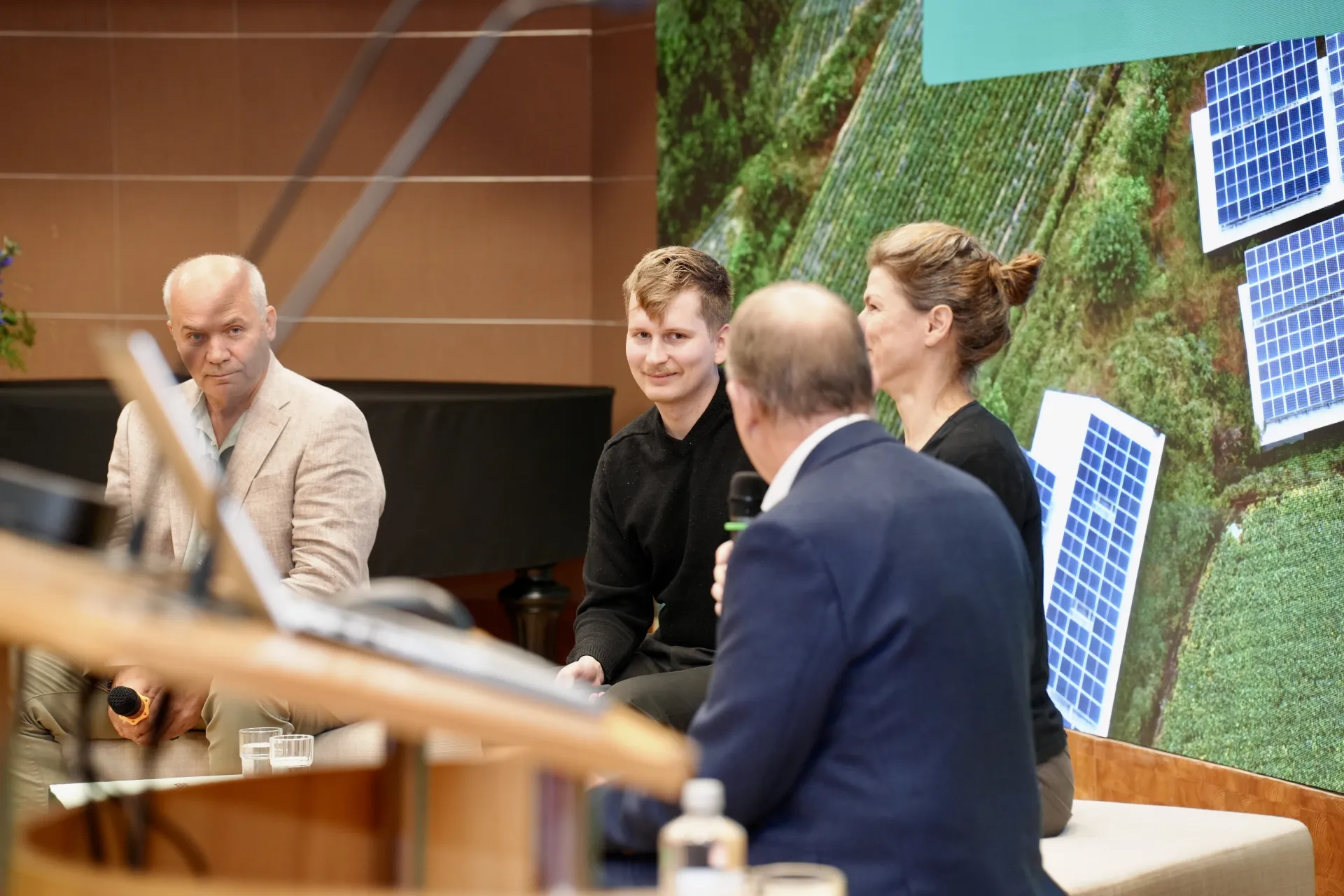
Photo author: Laura Killak
What StartSun pilots teach us about building energy communities
Energy communities are often described through technology: solar panels, batteries, electricity sharing and grid connections. The StartSun pilots show that the real story is wider. Shared energy is also about trust, local needs, clear numbers, legal frameworks and people who are willing to carry an idea forward.
Across Estonia, Sweden, Finland and Latvia, StartSun has tested how energy communities could work in very different places. The pilots did not follow one simple path. Some started from an urgent local problem. Some tested whether a promising idea could work. Some moved towards implementation. Others showed why good intentions are not always enough.
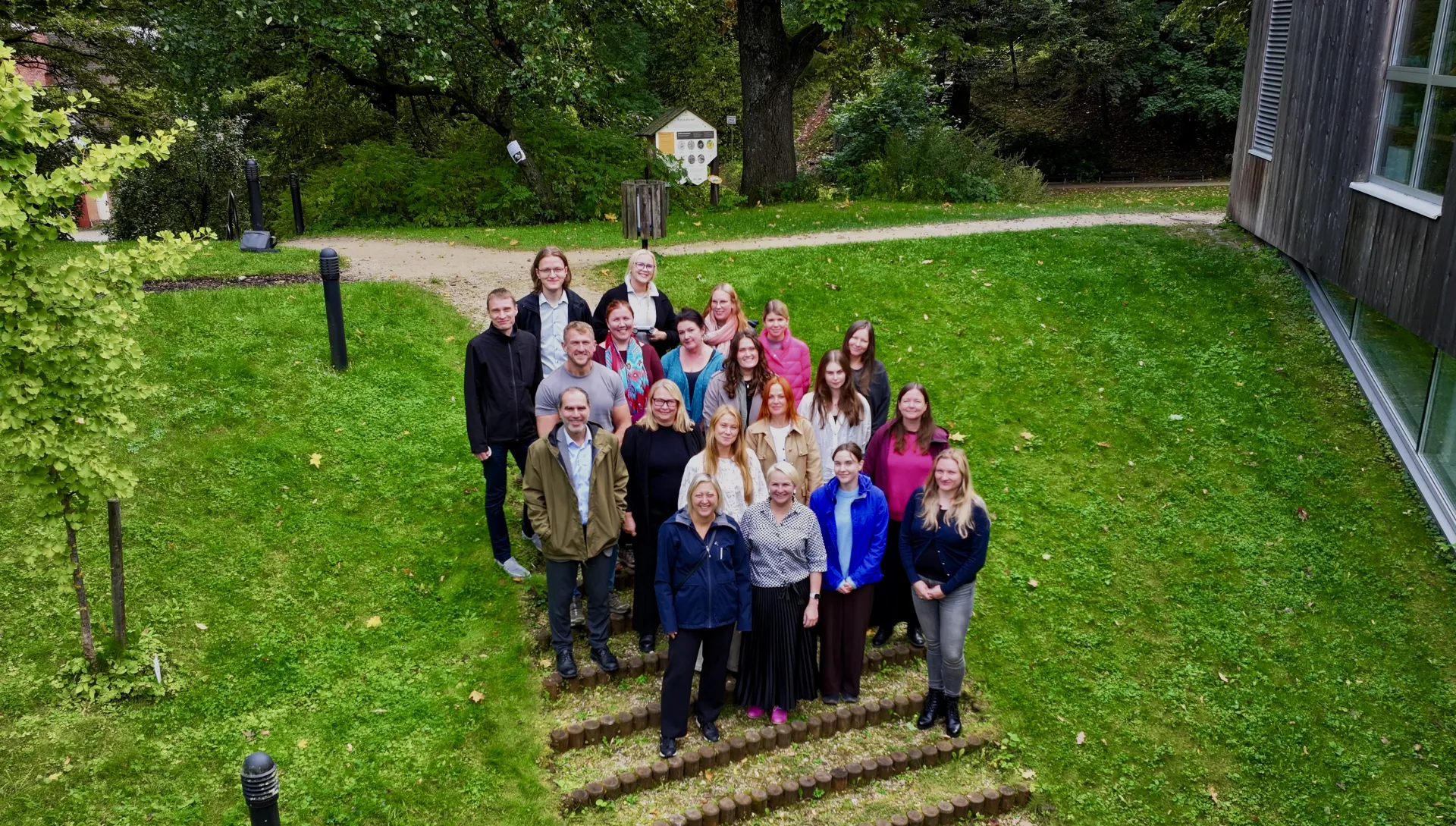
Pilot leads and Project managers 23.09 after the Conference
Photo author: Laura Killak
That is exactly why the project matters.
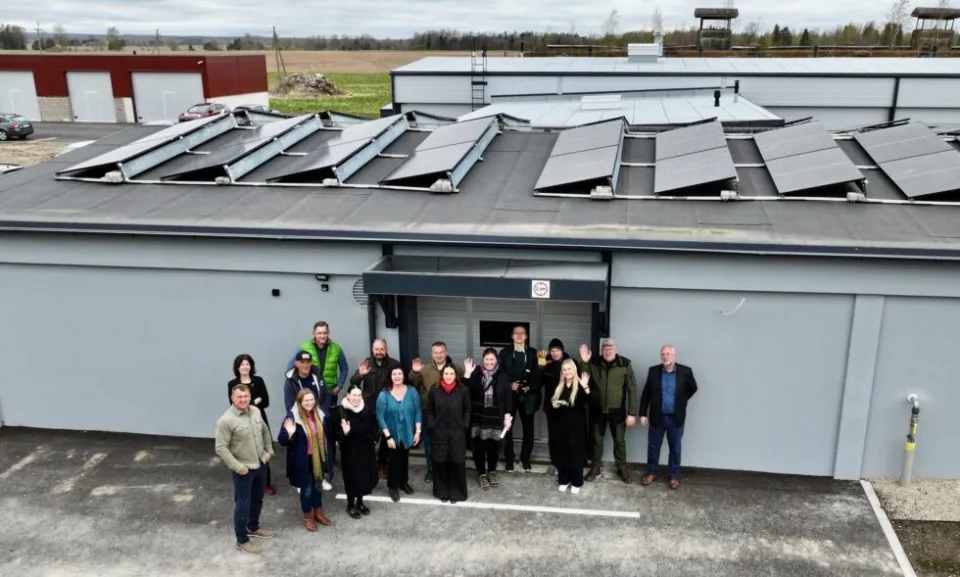
In Obinitsa, Estonia, the starting point was very concrete: high electricity costs, a cold storage facility and several tonnes of berries that once melted after a power outage. The case shows how a real local problem can create momentum. People understood the need because it affected their everyday work. StartSun gave the framework and support, but the motivation came from the community itself.
In Grebo, Sweden, the story was different. There was no sudden crisis. Instead, the pilot explored whether a growing village, with a school, church, grocery store and village association, could imagine a shared local energy future. The interest was real, but the case showed an important challenge: curiosity is not the same as capacity. An energy community needs people who can keep the process moving after the first meeting.
Facetten, also in Sweden, showed that even a promising site is not enough. On paper, the conditions looked good: a municipal building, business tenants, and space for solar panels nearby. In practice, the financial model, political confidence, and business commitment were not strong enough. Still, the pilot created value by building knowledge inside the municipality and shaping future energy planning.
In Marttila, Finland, the focus was on a housing property. The case showed that energy communities often start with calculations, not panels. Before making decisions, housing companies need to understand costs, savings, risks, payback time, building conditions, and financing. In Marttila, modelling helped make the idea concrete, but the roof, local grid and funding still slowed implementation.
In Jelgava, Latvia, the pilot brought the energy transition into public buildings: a school with a swimming pool and a culture centre. This made renewable energy visible in places people use every day. At the same time, Jelgava showed how complex a new legal model can be. The first year of operation will show what works, what needs adjustment and how municipal energy communities could be replicated.
Together, these pilots show that energy communities are not created by installing solar panels alone. They begin earlier, when people recognise a shared need, understand the options and decide that cooperation is worth the effort.
The value of StartSun is that it does not present one perfect model. Instead, it shows real experiences: urgency in Obinitsa, curiosity in Grebo, barriers in Facetten, calculations in Marttila and legal testing in Jelgava. These differences make the project useful for others.
A village, municipality, housing company or cooperative can look at these stories and ask: do we have a real need? Do we have people ready to lead? Do the numbers work? Are the buildings suitable? Is the legal setup clear? What support do we need before taking the next step?
That may be the most important lesson. Energy communities can support local resilience, reduce risks and make renewable energy more practical. But they need time, trust, knowledge and support. StartSun shows that shared energy is not only a technical solution. It is a community process.
Jelgava tests how public buildings can share solar energy
Jelgava’s energy community began with a practical municipal question: could the city cover part of the electricity needs of its public buildings with locally produced solar energy?
The city operates schools, libraries, municipal offices, cultural venues and leisure facilities that all require electricity. Until now, Jelgava has sought reasonable electricity prices through joint procurement. The StartSun project offered an opportunity to test whether some of the electricity used by public buildings could instead be produced on their own rooftops.
The pilot is based at two municipal buildings: Jelgava Pārlielupe Secondary School and the Jelgava Culture Centre. Solar panels and battery storage have been installed at both sites. The electricity produced will first cover the buildings’ own consumption. Any surplus can then be shared within the energy community.

Why this case matters
Jelgava shows how public buildings can serve as practical test sites for municipal energy communities.
Main challenge
The hardest part was developing the legal framework for a new concept in Latvia.
Lesson for others
Before choosing a building, assess not only its electricity use but also its roof structure, technical condition and long-term suitability.
Photo by Zemgale Regional Energy Agency
A city ready to test a new model
Jelgava has worked on energy and climate issues for years. In 2009, the city established the Zemgale Regional Energy Agency and joined the Covenant of Mayors. The municipality has continued to seek ways to reduce carbon dioxide emissions and improve the energy performance of its buildings.
When Jelgava City Municipality was invited to join StartSun as a pilot area, the goal was clear. The project had to lead to a concrete result: the establishment of an energy community.
This was challenging because the concept was still new in Latvia. At the same time, the project made it possible to install solar panels and battery storage at two municipal buildings.
The first discussions involved Jelgava municipal leadership, the Department of Development and Urban Planning and the Zemgale Regional Energy Agency, the project’s official partner in Jelgava.
The central question was not only whether solar panels would work technically. It was whether a municipality could test a practical model for sharing locally produced energy between its public buildings.
Public buildings at the centre of the pilot
The pilot is based in buildings that are part of everyday city life. One is a school with a swimming pool. The other is a culture centre that hosts concerts, children’s activities, dance studios, art studios and other events.
Producing part of their electricity locally connects renewable energy to services that residents use every day. Solar panels and batteries can help cover a share of electricity use in places where education, culture and community life take place.
The pilot also makes renewable energy more visible. When people see solar panels on a school, swimming pool or culture centre, the idea becomes linked to familiar local places rather than remaining an abstract technical concept.
A concept that needed explaining
When the idea was first introduced, the response was largely interested. People wanted to understand how the system would work and what an energy community would mean in practice.
In Latvia, the legal concept of an energy community is still new and complex. The team had to consider how energy sharing would work, what legal form was needed, how new regulation would fit with existing legislation and municipal procedures, and how much administrative work the model would require.
This raised an important practical question. Was an energy community always the simplest and most suitable way to use locally produced solar energy? In some buildings, self-consumption or a net metering system may be more appropriate. In other cases, an energy community can provide the best model.
Working through these questions is necessary if the approach is to be useful for other municipalities.
The hardest part was the legal framework
Bringing the two buildings into one energy community was not the most difficult part. Both buildings are connected to the same municipality, and the members of the energy community are Jelgava City Municipality and the Zemgale Regional Energy Agency.
The more difficult task was developing a legal framework that could work alongside existing legislation and municipal procedures. This required cooperation between lawyers, municipal leadership, the development department, representatives of both buildings and the energy agency.
The team held many meetings, and each stage required clarification. Jelgava was working with a new type of energy community model in Latvia, with few ready-made examples to follow.
One of the most useful outcomes of the process has been a clearer understanding of the documents, decisions and agreements needed to establish an energy community.
There is still practical uncertainty. It is not yet clear how much electricity the two buildings will use and how much surplus electricity will be available for sharing. The first year of operation will provide more reliable answers.
Choosing a building is not only about electricity use
One of Jelgava’s most practical lessons concerns the choice of buildings. A building with high electricity use during the sunnier part of the year may initially seem like an obvious choice. But energy use alone is not enough.
Before making a decision, the technical condition of the building must be assessed. Jelgava’s experience shows that a construction engineer’s opinion is needed to confirm whether a roof can carry solar panels.
Planning an energy community does not begin only with electricity bills and solar potential. It also requires attention to roofs, structures, permits and the long-term condition of the buildings.
If the building itself is not ready, even a well-designed energy community project may not move forward.
What other municipalities can learn
The Jelgava pilot shows that a municipal energy community can be a practical way to test renewable energy use in public buildings. But it also shows that an energy community is not the only possible solution.
Depending on the building and its energy-use profile, self-consumption, net metering or an energy community may be the most suitable approach. Choosing between these options requires clear information about legal requirements, technical conditions, costs and expected benefits.
Jelgava’s experience suggests that the StartSun Start-up Package can provide a useful starting point by bringing together the information needed to establish an energy community.
Based on the Jelgava experience, wider uptake would benefit from national support for renewable energy investments, including solar panels, batteries and ground-source heat pumps. More favourable conditions for energy sharing would also help similar initiatives develop.
The first year will provide the answers
Jelgava’s energy community has not yet shown how the model will work in the long term. The solar panels and battery storage are in place, but the system now needs to be tested in practice.
Only after a full year of operation will it be possible to assess what worked, what did not and what needs to be adjusted. Lower electricity bills during the sunnier part of the year would be a concrete benefit. If the sharing model needs changes, that will also provide valuable knowledge.
This is the purpose of the pilot. It is not intended to show that energy communities are simple or ready-made. It is intended to test how a municipality can make a new model work in real conditions.
Jelgava is now testing how locally produced solar energy can support the public buildings and services that residents use every day.

Photo author: Zemgale Regional Energy Agency
Obinitsa shows how a local problem can spark an energy community
The idea for the Obinitsa energy community did not grow out of an abstract wish to do something greener or more modern. It began with a practical problem: the high electricity bills of the Seto Aiad cold storage facility and the need to make local berry farming more reliable.
There were two clear reasons behind the creation of the cooperative Oma Elekter. The energy use of the cold storage facility directly affected nine local berry growers. At the same time, the StartSun project, which reached the region through Tartu Regional Energy Agency (TREA, EE), offered a real opportunity to find a solution.
The cooperative was created in response to a very concrete problem, while StartSun offered a possible way to address it.
Why this case matters
Obinitsa shows how an energy community can start from a very practical local risk.
Main challenge
Permits, procurement and an outstanding electricity sales agreement took more time than expected.
Lesson for others
Start with a real local problem and keep communication honest, including delays and doubts.
It all started with cold storage
The energy use of the Seto Aiad cold storage facility was the main driver behind the creation of the Obinitsa energy community. High electricity bills were not only an accounting issue. They directly affected the everyday work and costs of local berry growers.
Reliability was just as important as price. When a power outage once prevented the freezing equipment from restarting automatically, and no warning was sent, several tonnes of berries melted. For local growers, the need for a more reliable energy solution became impossible to ignore.
That moment made it clear that the problem was not only the price of electricity. It was also about risk, security and how to protect the work of local producers.
At first, the idea was discussed by TREA and members of Seto Aiad. Later, local residents and businesses operating in the area also joined the discussion. In this way, a cold storage problem began to grow into a broader community initiative.
An energy community as a practical solution
The idea to create an energy community came largely from the framework of the StartSun project. Establishing an energy community was one of the project requirements. At the same time, involving the community made the idea more meaningful.
If the solution had concerned only one cold storage facility, the circle of beneficiaries would have remained narrow. Through the energy community, the impact of the project could be widened and linked to the development of the whole area.
The beginning of Oma Elekter is therefore strongly connected to StartSun. But the project alone would not have been enough. People were needed with whom to do it, and those people were already present in the area.
A functioning cooperative, Seto Aiad, also provided a useful example. This made it logical to establish Oma Elekter as a cooperative as well.
The idea was explained simply. Members would make a joint investment in equipment, and all members of the energy cooperative would benefit directly or indirectly. At the beginning, even the initiators themselves did not fully understand the concept.
“At first, we did not really understand what kind of creature this energy community was,” it is recalled. “But when we decided to establish it as a cooperative, it became much easier to understand.”
Trust does not appear by accident
The community background of Obinitsa and Setomaa played an important role. Seto Aiad has been operating in the area since 2016, and that cooperation had already shown people that working together can lead to real results.
Still, not everything was simple from the beginning. There were many questions. Who would lead the process? How would participation be divided? Would membership bring obligations? Would the contribution be returned? Would the project make economic sense?
There was caution. Some interested people attended working group meetings but did not become members. The main hesitation was whether the project would pay off.
In such situations, open communication became decisive. Community cooperation is based on trust, but trust does not appear on its own. It has to be maintained deliberately.
“It is important to talk not only about successes, but also about things that go wrong or remain unfinished,” it is said. “Trust does not appear by accident.”
Documents, permits and waiting
Once the idea was clear and people were involved, it did not mean that everything moved quickly. The biggest obstacles were not mainly technical or financial. They were connected to documents, permits and processing times.
One of the first major obstacles was obtaining approval from the Rescue Board, which took longer than expected. Public procurement also added complexity. The first procurement had to be cancelled because the deadline for completing the work was too short.
The electricity sales agreement has still not been finalised. This shows that creating an energy community is not only about a good idea and a technical solution. It is also about steady administrative work.
Some obstacles were addressed through explanations and clarifications, while others simply required time and patience. Personal networks in the area also helped move the process forward.
StartSun gave a framework and an opportunity
StartSun played a significant role in the development of the Obinitsa energy community. The project brought funding, and the project action plan made the creation of the energy cooperative easier and more logical.
Financial support was essential. Without it, it would have been difficult for the community to build such a solution. But funding was not the only value. The project also made it possible to see how renewable energy is used in other countries and what opportunities and problems neighbouring communities face.
This broadened the understanding that a local energy solution is not only a question of one cold storage facility or one company. It can be part of a larger shift in which a community thinks through how to use its resources more wisely.
The impact of the solar park and storage system can be assessed more fully once the system is complete and operating. A larger engagement event is planned for the end of summer.
Own electricity means lower risk
In practical terms, Oma Elekter means that the Obinitsa community can reduce the burden caused by electricity costs and reliability risks for local agricultural producers.
This is not merely symbolic “own electricity”. It is a concrete way to ease the pressure caused by expensive electricity and make local production more secure.
The energy community has also brought together people from different fields. People who might not otherwise have come together around the same goal have contributed to the cooperative. In this way, the project has strengthened other forms of cooperation in the area.
One of the most important turning points was the moment when the cooperative was officially established at the notary.
“That was the moment when it really felt that this now exists,” it is recalled.
If the same journey were started again today, the group would know better how to account for documents and processing times. Awareness of the requirements is now much greater.
The Obinitsa experience shows that starting an energy community requires a real problem to solve. A general wish to do something is not always enough. A problem creates a need, and a need creates the will to act.
The next step for Oma Elekter is simple, but telling: to find the next problem that can be solved together. Obinitsa shows that even complex local challenges can be addressed when a community has a clear need, open communication and people willing to act together.



Jēkabpils explores energy sharing between public buildings
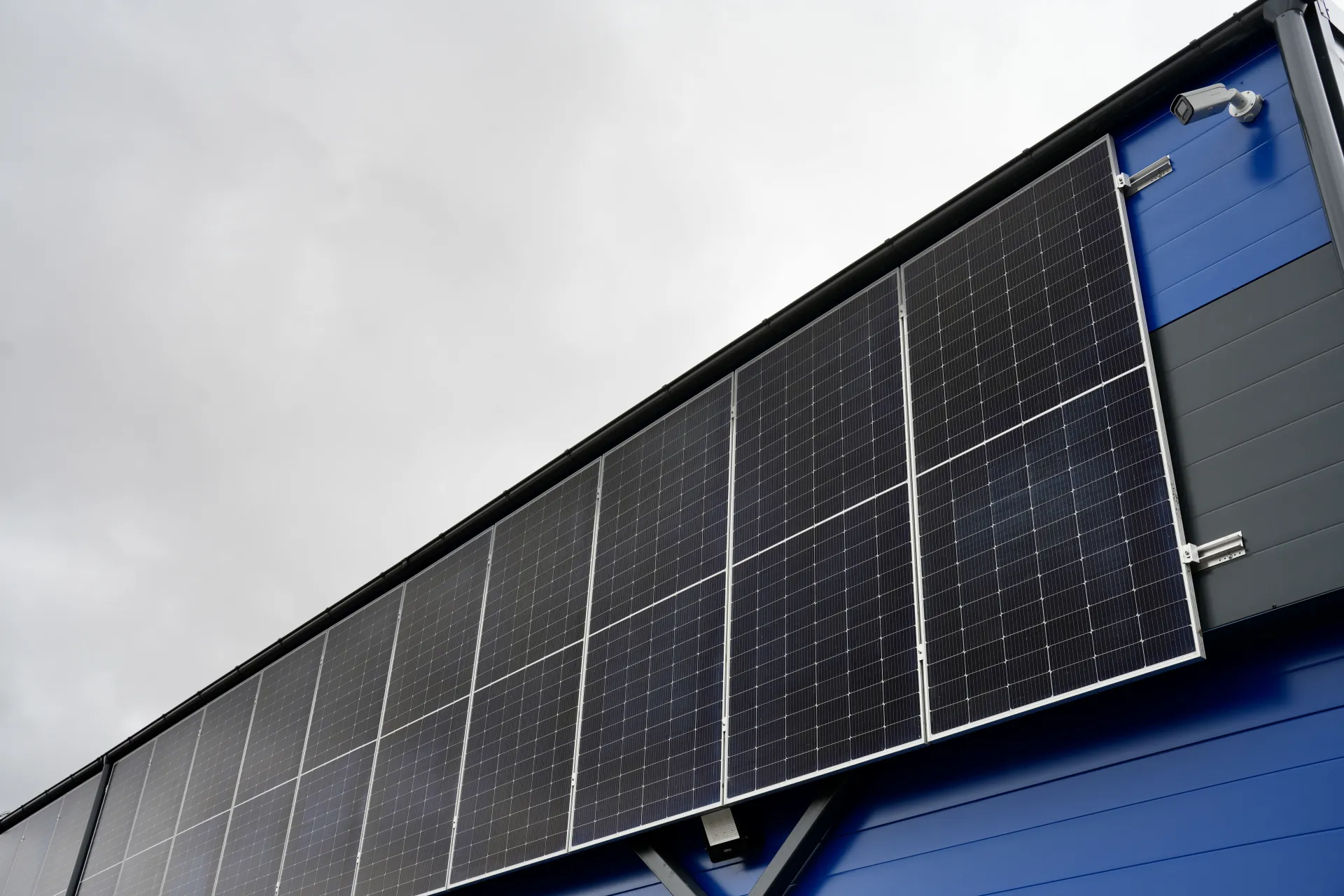
The Jēkabpils pilot began with a practical municipal need: to use locally generated renewable energy more efficiently, reduce public expenditure and strengthen energy security.
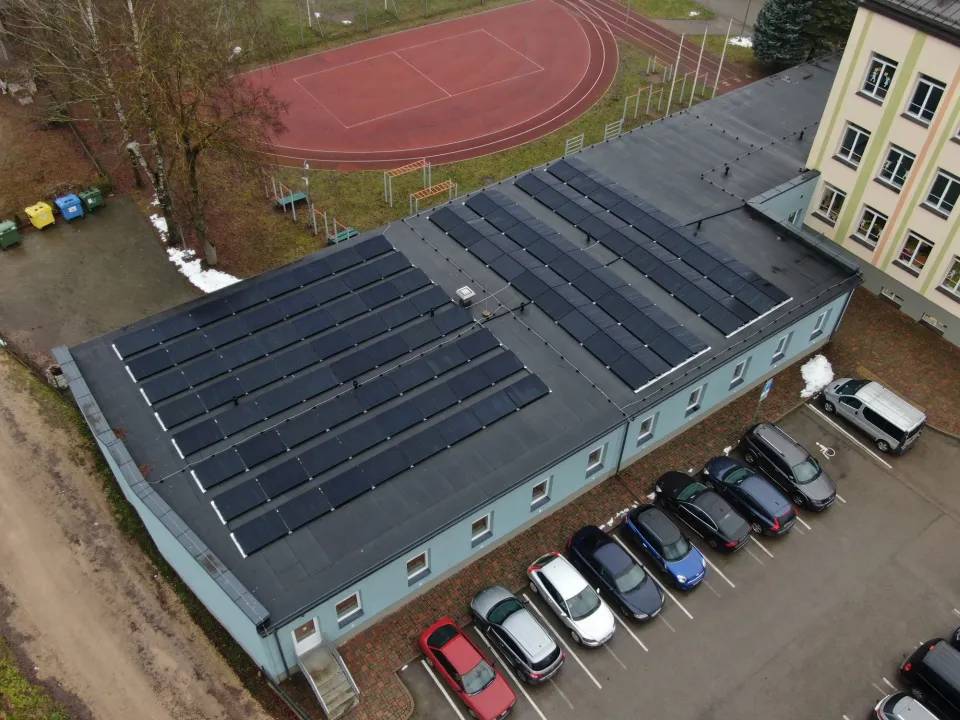
The idea of participating in StartSun came from the municipality’s Development Planning and Investment Department. Jēkabpils Municipality already had an established Energy Management System whose objectives were audited annually. The municipality regularly analysed how effectively its resources were being used, which provided a strong basis for exploring an energy community model.
According to the municipality, the applicable legal framework does not permit it to sell the electricity it generates. An energy community could offer another solution by allowing surplus electricity remaining after self-consumption to be shared among municipal buildings.
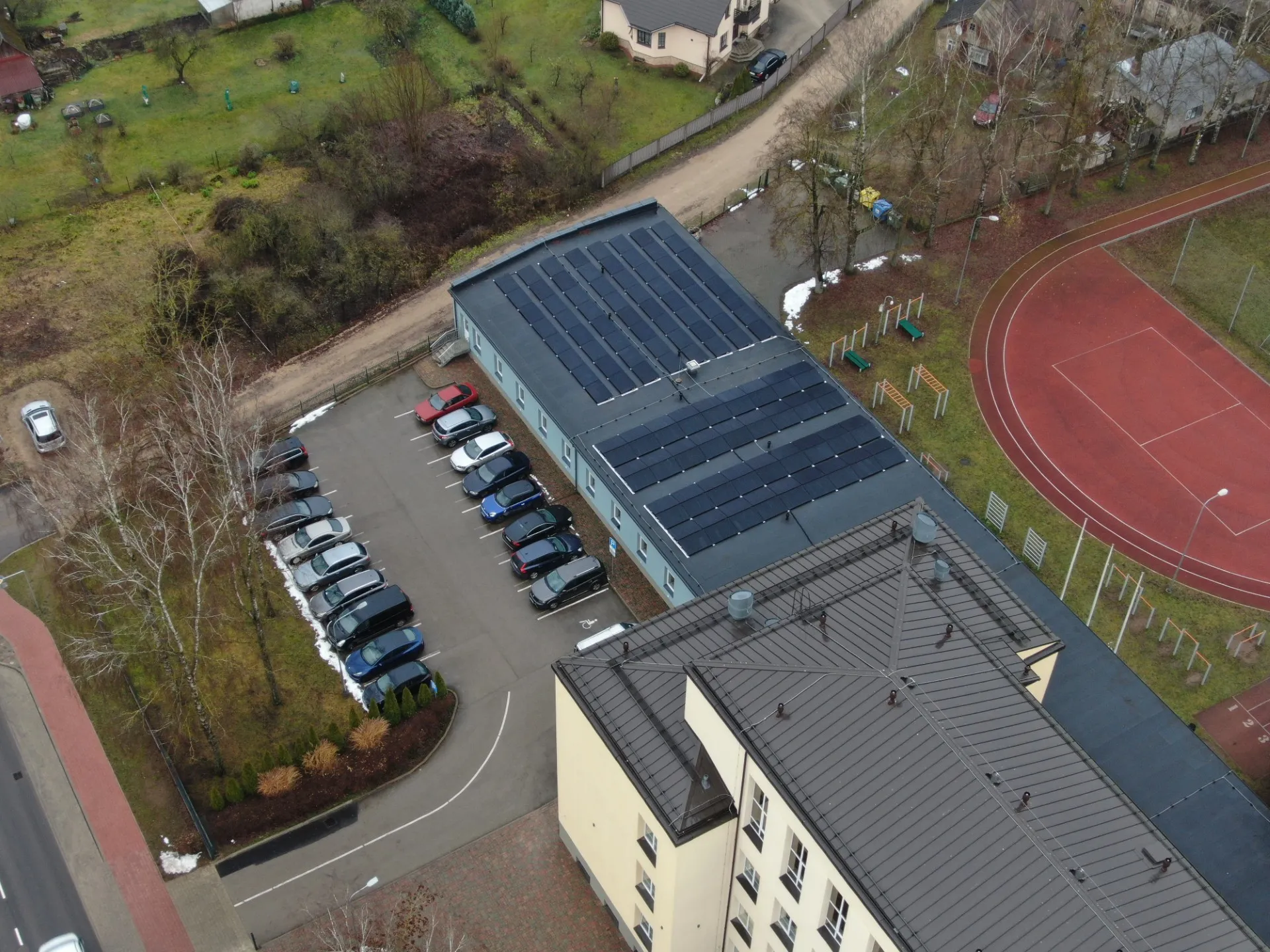
The necessary equipment has been installed, but the energy community association has not yet been established. The municipality is analysing electricity production data and consulting electricity suppliers to assess whether establishing the association would be financially viable.
Why this case matters
Jēkabpils illustrates the practical steps and challenges involved in combining renewable energy generation, battery storage and potential electricity sharing between municipal buildings.
Main challenge
The main barriers have been legal uncertainty and the need to coordinate the technical, organisational and energy-use requirements of different municipal buildings. The financial viability of establishing an energy community association is still being assessed.
Lesson for others
Plan renewable energy investments as a connected system, involve the relevant municipal departments early and examine the legal, technical and financial conditions before implementation.
A model built around public buildings
The first institutions involved were the Development Planning and Investment Department and civil engineers from the Infrastructure Management Department. As the project developed, other municipal departments and specialists also became involved, including the Education Department, development planning specialists and staff responsible for the participating buildings.
The pilot focused on municipal buildings that provide essential public services and support socially vulnerable groups. Their energy consumption was also analysed to identify opportunities to reduce the burden on the municipal budget.
Schools, preschools and sports facilities play an important role in community life. Preschools and schools provide childcare and education, support children’s development and help families balance work and family responsibilities. Sports halls promote physical activity, support athletes and host competitions and community events that bring together people of different ages and backgrounds.
These buildings are also significant energy consumers. Improving their energy efficiency and supplying them with locally generated renewable energy can reduce municipal expenditure and free up resources for other public needs.
The original site had to be changed
The initial plan involved installing solar panels on a preschool building selected in line with the project’s social objectives. However, after the project began, it was found that the preschool’s roof structure was unsuitable for solar panels.
The municipality therefore decided to implement the project at Jēkabpils 2nd Secondary School instead.
The school uses electricity for its day-to-day operations. Electricity stored in the battery can also power its security alarm system, ventilation and other electrical equipment.
The city sports hall was included because it is one of the largest electricity consumers among the municipality’s buildings. It also provides services to a wide range of residents, including socially vulnerable groups. Its role is to fulfil the municipality’s responsibilities in the field of sports, support local athletes participating in competitions and promote healthy lifestyles among residents.
Including the school and sports hall in the proposed model created an opportunity to assess whether surplus electricity generated at one municipal building could be used at another, and whether this would reduce overall electricity costs.
The practical benefits shaped local interest
The project aimed to address several local needs: reducing municipal expenditure, improving energy efficiency, increasing energy security and independence, and establishing a system for sharing surplus electricity between municipal buildings.
These aims made the project relevant to residents as well. It offered a visible example of how renewable energy solutions could work in practice while helping the municipality use public resources more efficiently.
The project was received positively by both the municipal leadership and local residents. Residents were informed about the project through social media, where the response was also positive.
However, the people involved still had important questions. The main concerns were how much benefit the proposed model would provide and whether it would be financially worthwhile. These questions remain central to the assessment now under way.
Legal uncertainty shaped the process
The project began before Latvia’s legislation on energy communities had been fully developed. This created uncertainty, raised questions and delayed parts of the process.
The biggest challenges were legal, although these also slowed down organisational decisions. Developing the proposed model required the municipality to consider legal requirements alongside technical solutions and the different energy consumption patterns of the participating buildings.
Planning electricity sharing between several public buildings was not simply a matter of installing equipment. The municipality also needed to examine how surplus electricity could be shared efficiently while accounting for the technical requirements and energy needs of each building.
Despite these uncertainties, several practical steps were completed. The existing situation was assessed, recommendations were prepared, the necessary equipment was purchased and installed, and the public was informed about the project. Establishing the energy community association remains a separate step, subject to the ongoing financial assessment.
Municipal cooperation kept the process moving
Because the municipality was responsible for implementing the project, cooperation between different departments was essential.
The process brought together civil engineers, education specialists, development planning staff and other municipal employees. Each contributed a different perspective, from building infrastructure and energy consumption to public services and project planning.
The responsible municipal staff monitored the project’s progress and results closely. This helped keep the practical activities on schedule despite the legal and organisational uncertainties.
The experience highlighted that preparing an energy community requires more than renewable energy equipment. It also needs careful planning, technical coordination, a clear legal framework and cooperation between the institutions involved.
A storm demonstrated the value of energy storage
The importance of energy storage became especially clear when a severe storm hit Jēkabpils Municipality in August. According to the municipality, the storm caused a municipality-wide loss of electricity and telephone communications.
The school’s battery storage allowed essential systems, including the security alarm and ventilation, to continue operating during the power outage.
The incident changed how many people viewed energy storage. It showed that batteries can help maintain essential functions during disruptions as well as support more efficient use of solar electricity.
Potential benefits of sharing surplus electricity
The proposed energy community would allow surplus electricity remaining after self-consumption to be shared among municipal buildings. If financially viable, this could help the municipality make greater use of locally generated renewable energy and reduce expenditure on electricity, potentially freeing up resources for other public services.
Battery storage has already demonstrated its value by keeping essential school systems operating during a power outage. The additional benefits of sharing electricity between buildings still need to be assessed.
The experience highlights the importance of considering generation, storage and the energy needs of different buildings together when planning municipal renewable energy investments.
Current status and next steps
Jēkabpils Municipality has installed renewable energy and battery storage equipment, but the energy community association has not yet been established. The municipality is currently analysing electricity production data and consulting electricity suppliers to assess whether establishing the association would be financially viable.
If the association is established, the aim is to share surplus electricity remaining after self-consumption among municipal buildings. This would build on the investments already made, with the goal of using locally generated electricity more efficiently and reducing municipal expenditure on electricity. The assessment needs to consider both the potential savings and the costs associated with sharing electricity.
For other municipalities, the experience underlines the importance of involving relevant departments early and assessing the legal, technical and financial conditions for energy sharing alongside investments in equipment. Public buildings can also serve as practical examples of renewable energy generation and storage for the wider community.
Jēkabpils has taken practical steps towards a possible energy community. Renewable energy generation and storage provide a foundation, while the ongoing financial assessment will help determine whether and how electricity sharing between municipal buildings can become a workable next step.
Marttila shows why energy communities start with calculations, not solar panels
The idea of exploring an energy community in Marttila did not begin with a broad wish to do something greener or more innovative. It grew out of a practical need to understand how a typical Finnish housing company could modernise its energy system, reduce long-term costs and make better use of local solar production.
The Marttila pilot emerged through cooperation between two projects in Finland. StartSun found its case study through collaboration with Valonia and its TEMU project, which had already been examining how housing companies could benefit from energy communities.
Although the original aim had been to create a fully operational solar energy community, real-life implementation constraints led the Green Net Finland team to use Marttila as a practical pilot for testing frameworks, feasibility and decision-making.
“We needed a real case that would allow us to test what an energy community could look like in practice,” the Marttila story could be summed up.
Why this case matters
Marttila shows how modelling can help housing companies turn a complex energy idea into a decision.
Main challenge
The local grid, roof condition and financing slowed implementation.
Lesson for others
Check the building, calculate the case and explain the benefits before expecting a decision.
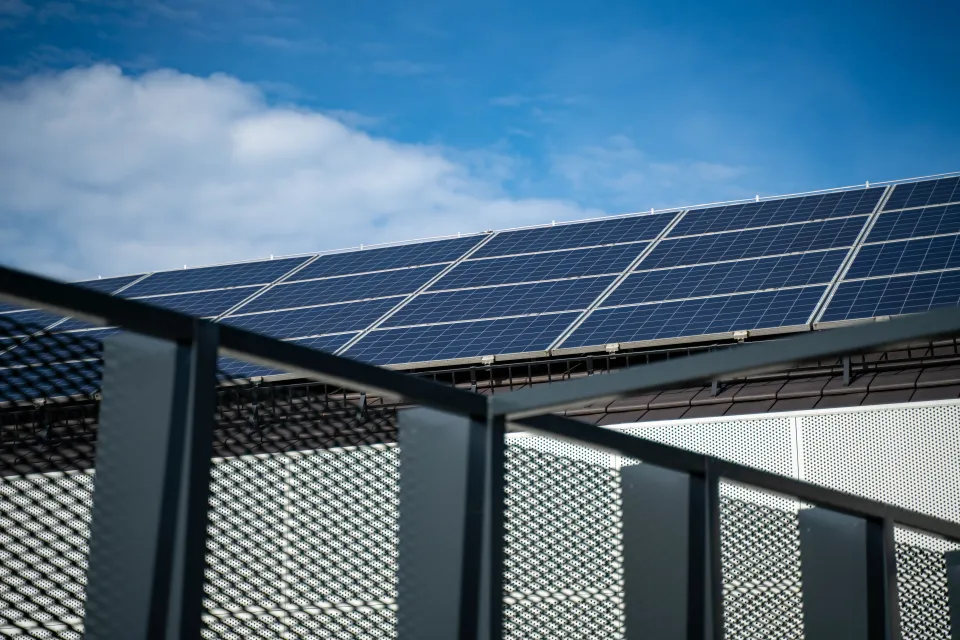
Photo is an illustration
It started from a real housing property
Marttila was a suitable place to explore the model because it reflected a common Finnish situation. The pilot site was a municipally owned rental housing company made up of terraced houses, with two buildings and six apartments. Built in the 1990s, the property represented the kind of housing stock that many municipalities and housing companies across Finland are trying to update.
The site also had a clear technical challenge. It needed to move away from oil heating, and the transition to an air-to-water heat pump increased electricity demand. Future needs, such as electric vehicle charging, also had to be taken into account.
This made the site a realistic test case for how local energy production could support a building’s changing energy use. The property manager was already thinking in long timeframes rather than short-term fixes, which made the case especially useful.
An energy community as a practical model
In Marttila, the energy community idea took shape within the Finnish model of a property-internal energy community. This is the most straightforward approach in Finland, because it uses the housing company’s existing grid connection and makes it possible to allocate solar electricity to both common building consumption and residents’ own use.
That made the concept practical rather than abstract. The pilot explored how solar production could be shared fairly between the housing company and tenants by using Finland’s official credit calculation model through Fingrid’s Datahub.
If the case had been approached only as a technical solar project, the discussion would have remained narrower. Looking at it as an energy community made it possible to ask broader questions about fairness, distribution of benefits, resident impact and long-term resilience.
The role of modelling quickly became central. Instead of relying on general enthusiasm, the pilot focused on concrete figures: investment costs, expected savings, payback time, risks and distribution of benefits.
Clear figures build confidence
One of the clearest lessons from Marttila is that energy communities become easier to understand when they are explained through real calculations. The modelling work helped turn a complicated idea into something concrete and discussable.
Board members and decision-makers need more than a general description. They need reliable information about costs, savings, maintenance, payback time, legal issues and potential risks.
The modelling also produced useful reality checks. For example, it showed that integrating a battery energy storage system would not be financially viable because of high maintenance costs. That helped avoid an unprofitable investment and redirected attention to a more sensible goal: maximising the self-consumption of solar energy.
In this way, modelling did not simply support the idea. It also sharpened it.
Questions came before decisions
In Marttila, the first discussions were focused. Because the property manager already understood the site’s technical characteristics, the main interest was in feasibility calculations, profitability of solar PV, fire safety and equipment placement.
The main doubts were practical. People wanted clarity on fire safety, insurance and whether the planned solar solution would make economic sense. These are the concerns that determine whether an energy community remains an interesting concept or becomes a credible project.
Trust matters greatly in this process. An energy community is not a short-term experiment but a long-term commitment, both financially and technically. Decision-makers need to feel that the data is reliable and the proposal is grounded in realistic assumptions.
In Finland, housing company decision-making is structured and democratic. The board usually prepares a proposal, and the final decision is made by stakeholders through a majority vote at the general meeting. In Marttila, the municipally owned nature of the property added another layer, because public stakeholders also had to be considered.
Technical barriers slowed progress
The Marttila pilot showed how decisive technical and infrastructural barriers can be.
One major challenge was the local electricity grid. Changes in the heating system and preparation for future loads meant that the distribution system operator had to reinforce the regional grid. This caused a delay of around one and a half years.
The roof created another obstacle. Because the existing 1990s roof was not structurally suitable for solar panels, a full renovation was needed before installation could move forward. Fire safety requirements also had to be mapped carefully, including the placement of the inverter and firefighter safety switches.
Financial questions were present as well. The housing company already had debt related to renovations and other necessary expenses, which meant that financing an energy community could have been difficult even if the technical side had been ready.
All this showed that the path from idea to implementation depends heavily on the overall condition of the property. Before additional investments are made, the sustainability basics of the building need to be in place.
Low awareness, strong relevance
Another lesson from Marttila is that the concept of energy communities is still not widely familiar in Finland. For many housing companies, boards and residents, the practical meaning remains unclear.
At the same time, Finnish legislation and technical systems already support one specific and practical form of energy community: shared solar energy within housing companies.
That means the challenge is not only legal or technological. It is also communicative. Energy communities need to be explained in a simple and practical way. When the idea feels too complex, people hesitate. When it is described through real examples, calculations and understandable benefits, it becomes easier to discuss.
Housing companies need clear guidelines, expert support, reliable decision-making tools, financial support and opportunities to learn from comparable pilots.
What Marttila teaches others
The most valuable lesson from Marttila is that an energy community should not be planned in isolation from the wider condition and future of the property. The building, its renovation needs and its long-term development path must be studied first.
Marttila also shows the value of open communication and steady cooperation. The case advanced through repeated discussions between the property manager and the Green Net Finland team. With every meeting, the shared understanding improved.
The idea has not yet fully moved from modelling to implementation. One remaining issue is funding. Many housing companies lack the financial capacity to move ahead alone, even when the concept is sound.
Still, the pilot has shown why this model matters. In the long term, energy communities can help residents by making energy costs more stable and predictable while improving local resilience.
If the Marttila story had to be captured in one sentence, it might be this: clear modelling, steady cooperation and practical communication can turn an abstract energy idea into a concrete and achievable plan.

Foto on illustreeriv
Facetten shows what it takes to turn a promising site into an energy community
The Facetten pilot in Åtvidaberg began with ambition and a practical municipal interest. Åtvidaberg Municipality had a long history of working with climate and energy projects, and StartSun offered an opportunity to connect that experience with something concrete: lower energy use, local renewable energy production and a new way of organising energy around a shared site.
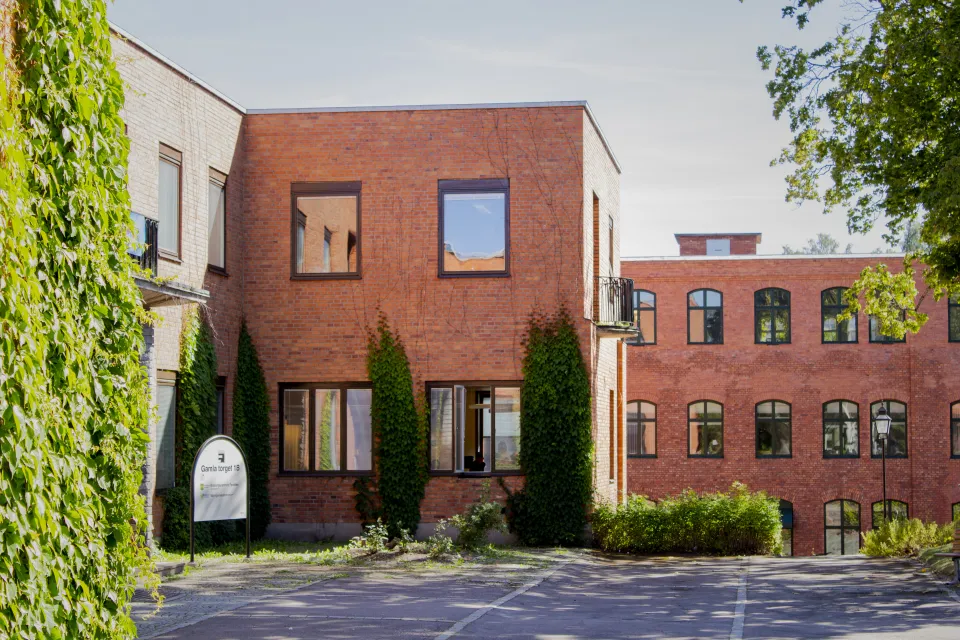
From the beginning, the idea looked promising. Solar panels could be installed either on the roof of Facetten or on the former sawmill site next to the building. Facetten, a municipally owned building with several business tenants, seemed like a credible place to test how an energy community could work in practice.
The original vision was to create an energy community that could later expand and show how municipalities can take an active role in innovative energy solutions. But the case also showed something just as important: a suitable site is not enough if the value proposition, political support and member commitment are not strong enough.
Why this case matters
Facetten shows that municipalities need more than a suitable site to create an energy community.
Main challenge
The financial viability of the model, political support and commitment from potential members were not strong enough. The case also showed that building support for new initiatives and ideas takes time.
Lesson for others
Bring the municipality and potential members together early, build a shared understanding of the model and make the practical value clear before asking people to commit.
A site with real potential
Facetten was not chosen by accident. The municipality was already looking at the former sawmill site in connection with plans to remediate the area. That created an opportunity to think more broadly about local energy production.
The building itself also made the case interesting. Several businesses rented space there, creating a potential basis for a shared model in which different users could become members of an energy community.
On paper, the case looked strong: a municipal owner, a nearby area that could host solar panels and potential participants already located in the same building. The early discussions reflected that promise. First, relevant people inside the municipality were involved, especially from the property department. Then the businesses renting premises at Facetten were included as potential members.
Interest was real, but did not become commitment
The process initially focused on businesses in the building and relevant actors within the municipal organisation rather than the wider Åtvidaberg community.
Among those invited early in the process, the response was not negative. Businesses showed interest and curiosity. They were already knowledgeable about energy issues and interested in renewable energy. But they wanted to know something more specific: how would an energy community affect their business model, and would it actually lower their energy costs?
That question became central. An energy community can sound appealing in principle, but potential members need to understand the practical benefit for their own organisation. In Facetten, the initial interest did not develop into enough commitment to support the planned model.
This may also have been affected by limited engagement between the project working group and the potential members. Because many aspects of the proposed model were still unclear, it was difficult for the working group to determine how much time and involvement to ask from the businesses.
It was not fully clear whether the hesitation resulted from limited understanding of the model, insufficient dialogue or the fact that the proposal itself did not yet seem attractive enough.
The difficulty was not only technical
The project did not stall because the technology seemed impossible. The barriers were more complicated.
At first, it was difficult to engage potential members without a clear path for establishing the energy community. The project team had to build interest while being honest about the uncertainty. The municipality had not yet secured the political investment decision needed to move forward, which made it harder to give businesses a concrete offer.
As the work continued, the main barrier became financial. The expected profitability of an energy community at Facetten was lower than hoped. Because the municipality would have owned the model, the need for a power purchase agreement, administrative costs and additional taxes reduced the attractiveness of the setup.
Facetten showed that even where the physical conditions are good, the organisational and financial design can determine whether an energy community still makes sense.
Knowledge was also a barrier
Another challenge was knowledge. Energy communities are still a relatively new concept, and many people involved did not have a clear understanding of what participation would involve, what benefits it could bring or what responsibilities it might create.
This mattered both among businesses and within the political organisation. Some businesses only partly understood the model. At the same time, the benefits did not seem strong enough to generate significant interest. It was difficult to separate limited understanding from limited attractiveness.
On the political side, more time, clearer information and greater confidence in what the project would involve would likely have been needed before committing to the investment.
If an energy community is introduced before the groundwork of knowledge-building has been done, even potentially supportive actors may hesitate.
When the original plan began to unravel
The turning point came when it became clear that the project needed a political investment decision to move ahead with solar panels at Facetten and to commit municipal resources to the energy community. That decision did not materialise.
The issue was not opposition to solar panels as such. The larger problem was that too few businesses were ready to join the model. As a result, the municipality would have had to carry more responsibility than it was prepared to take at that time.
That shifted the project from a shared initiative into something heavier for the municipal side, and the original plan became difficult to justify.
For the project team, this was disappointing and frustrating. They felt that with more time for dialogue and knowledge-building, the energy community might have had a stronger chance. Facetten was not a case of immediate rejection. Rather, timing, uncertainty, a lack of dialogue and the absence of an appealing proposal prevented the process from fully maturing.
Still valuable, even without full implementation
The Facetten case did not develop as originally planned, but the process still created value.
Inside the municipality, the work built capacity. It improved understanding of how energy communities function, what role a municipality can play and what kinds of challenges such processes involve. The solar calculations produced through the project were later used elsewhere in the municipality to better understand where and how solar energy could reduce energy use and costs.
The process also helped shape municipal strategy. Åtvidaberg’s energy and climate strategy now includes a target related to working towards the establishment of energy communities in the municipality. The municipality is also planning solar panels at Facetten outside the formal framework of StartSun.
The possibility of an energy community at Facetten has not been forgotten either. The municipality intends to continue exploring how one could be established in the future, and the businesses in the building are aware that the discussion may continue.
Facetten matters precisely because it did not unfold neatly. It shows where real friction points can arise: limited time, limited shared understanding, weak incentives and institutional complexity.
A promising site is not enough on its own. Energy communities need time, a credible value proposition, informed participants and political support. Municipalities can play an important role as facilitators, but they also need the right conditions to bring potential members into a meaningful shared process.

Why this case matters
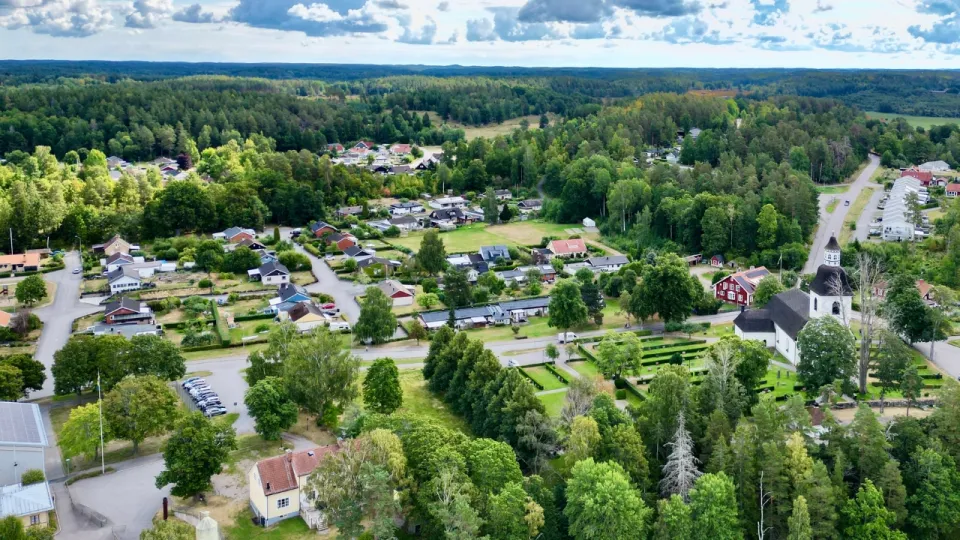
Grebo shows that interest in local energy is not enough without people who can carry the process forward.
Main challenge
The main barrier was organisational capacity, not technology.
Lesson for others
A community needs a shared goal and a committed core group before an energy community can move from idea to action.
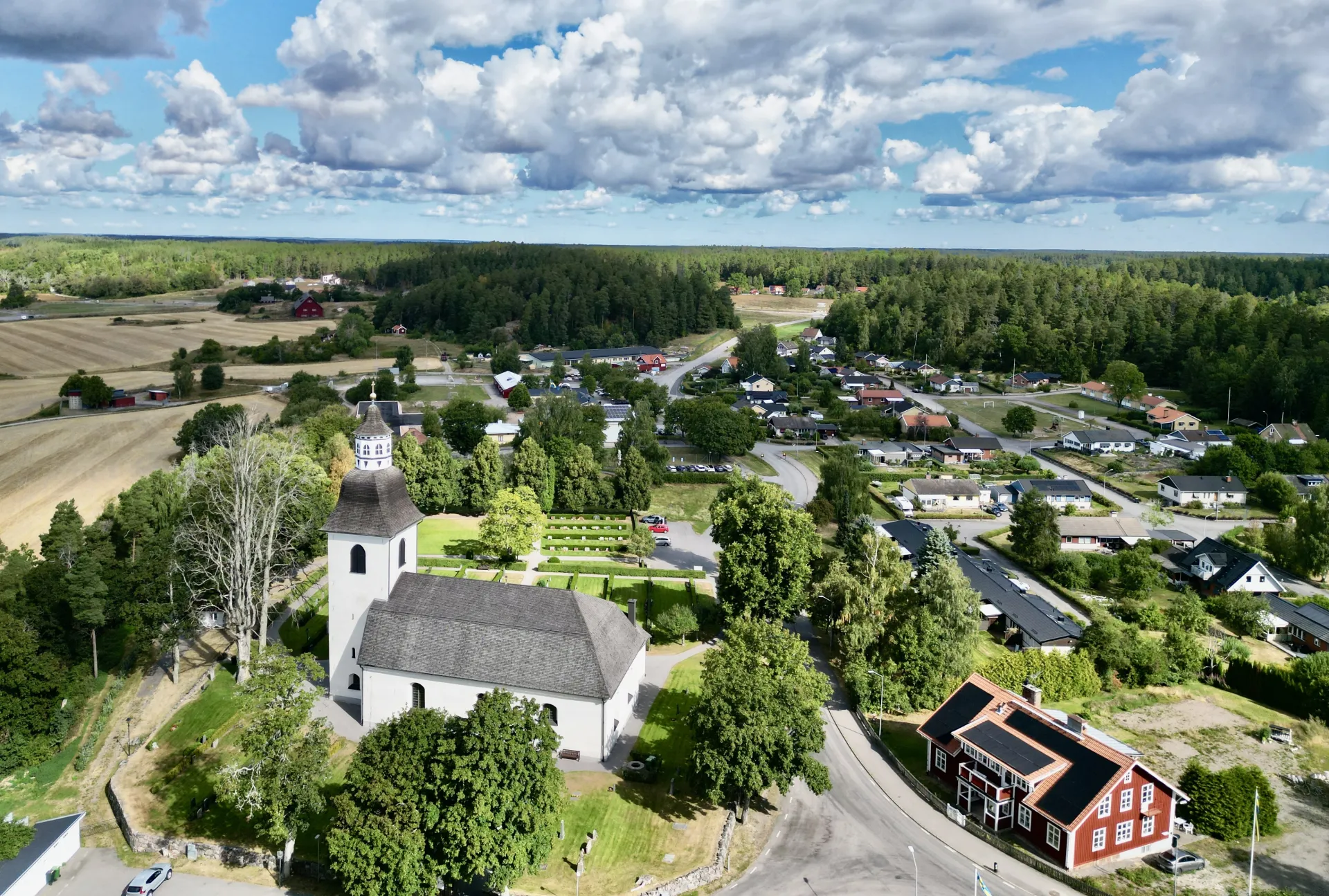
A village in a phase of change
Grebo is in an expansive phase. Around 200 new plots are planned in the coming years, which gave the discussions a forward-looking dimension from the start. The question was not only how electricity is used today. It was also what kind of local energy model could make sense in a community expected to grow.
The village also had an interesting mix of local actors. Early discussions focused on places that already matter in village life: the church, the grocery store, the school and the village association. They are close to one another, important for everyday life and have different electricity-use patterns that could complement one another in a future energy community.
These actors also function as connection points in the community. If an energy community ever moves beyond the pilot stage, they could help bring more people into the conversation.
From project discussion to local conversation
The first phase was led by the project working group, which brought together the County Administrative Board, Uppsala University and Åtvidaberg Municipality. Within the municipality, people from spatial planning, property management and technical functions were involved early. The goal was not to launch an energy community overnight, but to investigate whether Grebo had the conditions to make the idea meaningful.
Local discussions followed. Representatives of the church, the grocery store and the village association were invited to in-person meetings to hear what an energy community could mean in practice.
The initial response was positive. The concept was new, but renewable energy was not. Some actors already had solar panels and were familiar with the technology. What was new was the idea of doing something shared rather than individual.
That distinction mattered. In Grebo, interest did not arise because people were waiting for the term “energy community”. It arose because they were already interested in renewable energy and wanted to know whether sharing electricity could make financial and practical sense.
Trust was not a side issue
One of the clearest themes in the Grebo case is trust. In a village setting, that is not a soft extra. It is one of the main conditions for progress.
The discussions among the involved local actors showed that cooperation in Grebo is strong enough to give an energy community a credible starting point. People know each other and are used to working together in village life. That kind of social infrastructure is difficult to build from scratch, and it matters when a project requires investment and long-term commitment.
The project team also brought in an example from elsewhere. A representative from the Swedish energy community Fegen joined the discussions and helped make the concept more tangible. That added proof that the idea was not only theoretical.
Still, goodwill is not the same as capacity. When discussing how to move the process of starting an energy community forward, the locals who were involved were cautious. It was not rejection in principle. It was the familiar problem of time and capacity. People were interested, but already busy.
The hard part was not the first meeting
It was not difficult to get the first group of potential members around the table. The first meetings were well attended, the tone was constructive and the interest was real among the actors involved. The wider Grebo community had not yet been brought into the process.
What proved harder was maintaining momentum between meetings. Responses became slower and communication was more difficult to sustain. The project team’s interpretation is telling: this may partly have been because the process was initiated from the top down. If the push had come directly from the community, the follow-up might have been stronger.
This is one of the most useful insights from Grebo. Many communities are open to the idea of an energy community. Fewer have a core group ready to carry the work forward once the first conversation is over.
That is why the main barriers in Grebo were not primarily technical. They were organisational. The biggest question was who would take ownership of the next step. Legal issues, including taxation related to electricity sharing, also made the financial case less straightforward.
A useful pilot, even without full implementation
The StartSun work in Grebo was approached as a hypothetical case, but that should not be mistaken for a weak result. The aim was not only to draw a concept on paper. It was to build capacity in the municipality, among the involved local actors and in the wider community over time.
The process increased knowledge, brought relevant local actors into the same discussion and created a basis for future decisions. It also influenced how the municipality now thinks about new development. Energy community thinking was not built into Grebo’s expansion plans from the start, but StartSun has opened up discussions about whether it could be included later.
Grebo has not produced a finished model that others can copy. What it has produced is a grounded picture of what it takes to move from curiosity to collective action.
For other communities, the lesson is clear. Start with a shared need, goal or vision. Then make sure there is a core group willing to carry the process. Without that, even strong local interest may not be enough.
Kääpa energy community grows through patience, trust and local leadership
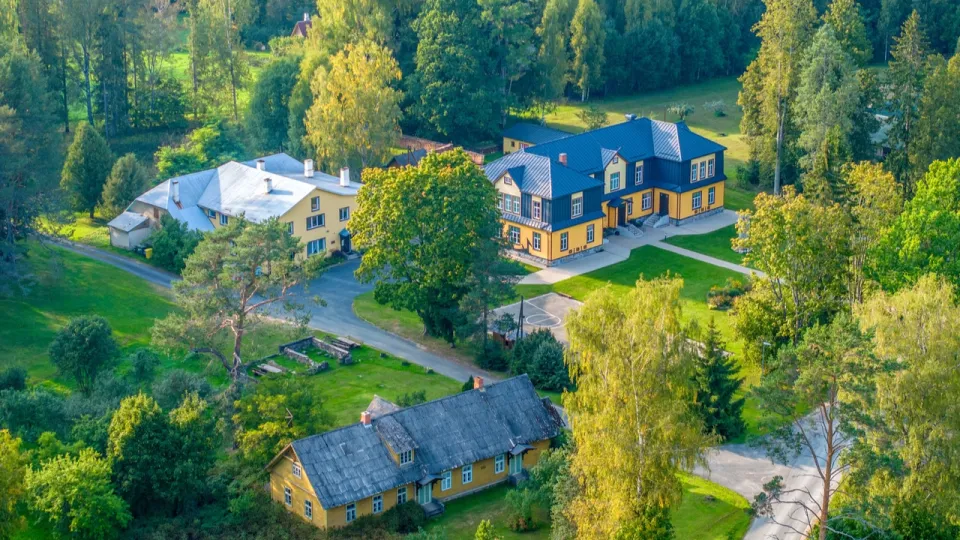
The idea for the Kääpa energy community emerged through the Smart Villages development programme, where local people, the municipality and energy experts discussed the village’s future needs. The first discussions were followed by meetings in Kääpa with representatives of the Tartu Regional Energy Agency (TREA) and the municipality. Later, an opportunity arose to involve Kääpa as a StartSun pilot area.
At the same time, Kääpa was looking for new energy solutions. The existing boiler house was in very poor condition, the municipality was working on a district heating solution, and apartment buildings needed renovation. Creating an energy community was therefore linked not only to electricity, but also to heating, building renovation, the functioning of local services and greater energy independence.
Why this case matters
In Kääpa, the energy community was driven by several local needs at once. Solutions were needed for heating, building renovation, local services and greater energy independence.
Main challenge
The most difficult task was finding a model that would motivate different stakeholders to join at a time when it was not yet possible to demonstrate a direct financial benefit.
Lesson for others
In a small community, adopting a new energy solution takes time. It requires trusted local leaders, repeated discussions and clear answers to practical questions.
A village looking for practical solutions
The idea of an energy community in Kääpa was not limited to electricity. Finding a better solution for local heating was equally important.
The boiler house is currently operated by a private company, which is planning a more sustainable heating solution. The company intends to replace oil heating with wood chips and renovate the boiler house. The renovation would help make the local heat supply more reliable.
In the future, the boiler house could also produce hot water if the residents of at least one apartment building wanted such a solution. In that case, it could make sense to build a solar park near the boiler house. Since the boiler house has not yet been renovated, building a solar park there was not considered practical at this stage.
The original plan had to change
Initially, the aim was to involve local stakeholders connected to services important for the village, including companies and organisations linked to heating, the local shop and water supply.
Several obstacles emerged during the process, and the original plan had to be adapted. The buildings now directly involved in the energy community initiative are the community house and the Kalevipoeg Museum, managed by the Kalevipoja Koda Foundation.
Kalevipoja Koda is a project partner and will remain so for another five years. After that, the organisation can continue as a member of the energy community.
The original solution did not prove fully feasible, so new opportunities had to be found. Adjusting the plans therefore became a natural part of the process.
Interest developed step by step
Local entrepreneurs were generally more open to the idea, while some residents were more cautious.
There were few functioning energy communities in Estonia that could have helped explain the new model simply and concretely. People had practical questions. What benefit will the energy community bring? Will others join? Will participation be worthwhile?
Financial concerns caused the greatest hesitation. People feared that joining would require costs without a clear understanding of what they would receive in return. The concept of an energy community itself was also difficult to explain and is still not understood in the same way by everyone.
Experiences from other countries, local discussions and solar park simulations helped people better understand the possible solutions. Interest and willingness to participate developed gradually.
Who should move forward together?
An early question was who should establish the energy community together.
The aim was to make participation possible for both businesses and private individuals. This immediately raised practical questions. On what basis could someone become a member? What decision-making rights would members have? Which legal form would suit the different parties?
Involving private individuals proved difficult. Building solar parks on apartment building roofs was also not considered practical at this stage. The focus therefore shifted more towards businesses and public buildings.
The local electricity grid also imposed limits. The grid connection did not have sufficient capacity to sell electricity to the grid, and increasing that capacity would have required an investment of approximately EUR 30,000.
It was also difficult to find a project manager with enough time to lead the whole process.
Trust matters more than speed
The progress of an energy community depends largely on trust. People will not join an initiative if they do not understand the risks involved or fear that participation could harm them.
Both the potential risks and benefits therefore need to be explained thoroughly. In Kääpa, it was considered better to move more slowly and give people time than to rush ahead and damage trust through mistakes.
Local leaders play an important role. It is easier for people to join a new initiative alongside people they already know and trust. Someone coming from outside the community finds it harder to establish the same kind of connection without an existing relationship.
Flexibility and expert support helped move the process forward
Progress was supported by a willingness to adapt the original plans, expert support from TREA and other project partners, and closer communication with the village’s larger companies.
The discussions increased awareness of the opportunities offered by an energy community, and a cooperative was established whose members want to develop the initiative further.
The next important step is completing the solar parks. They are expected to provide direct benefits to two buildings that are important to the community.
Future ideas discussed include apartment building renovation, the use of hydropower at Koseveski, and dryers for garden and forest products.
There was no ready-made model
Kääpa did not have a ready-made energy community model that could simply be adopted. The solution had to be shaped around local needs, opportunities and constraints.
Based on the experience so far, it would have been useful to invest more time in finding a strong project manager and, from the outset, to study more closely the experiences of Estonian places where similar initiatives had already begun.
In a small community, understanding and adopting a new energy solution takes time. In Kääpa, progress has required trusted local leaders, repeated discussions and a willingness to adjust the original plans. The energy community did not emerge around one ready-made solution. It developed step by step as different needs and opportunities emerged during the process.
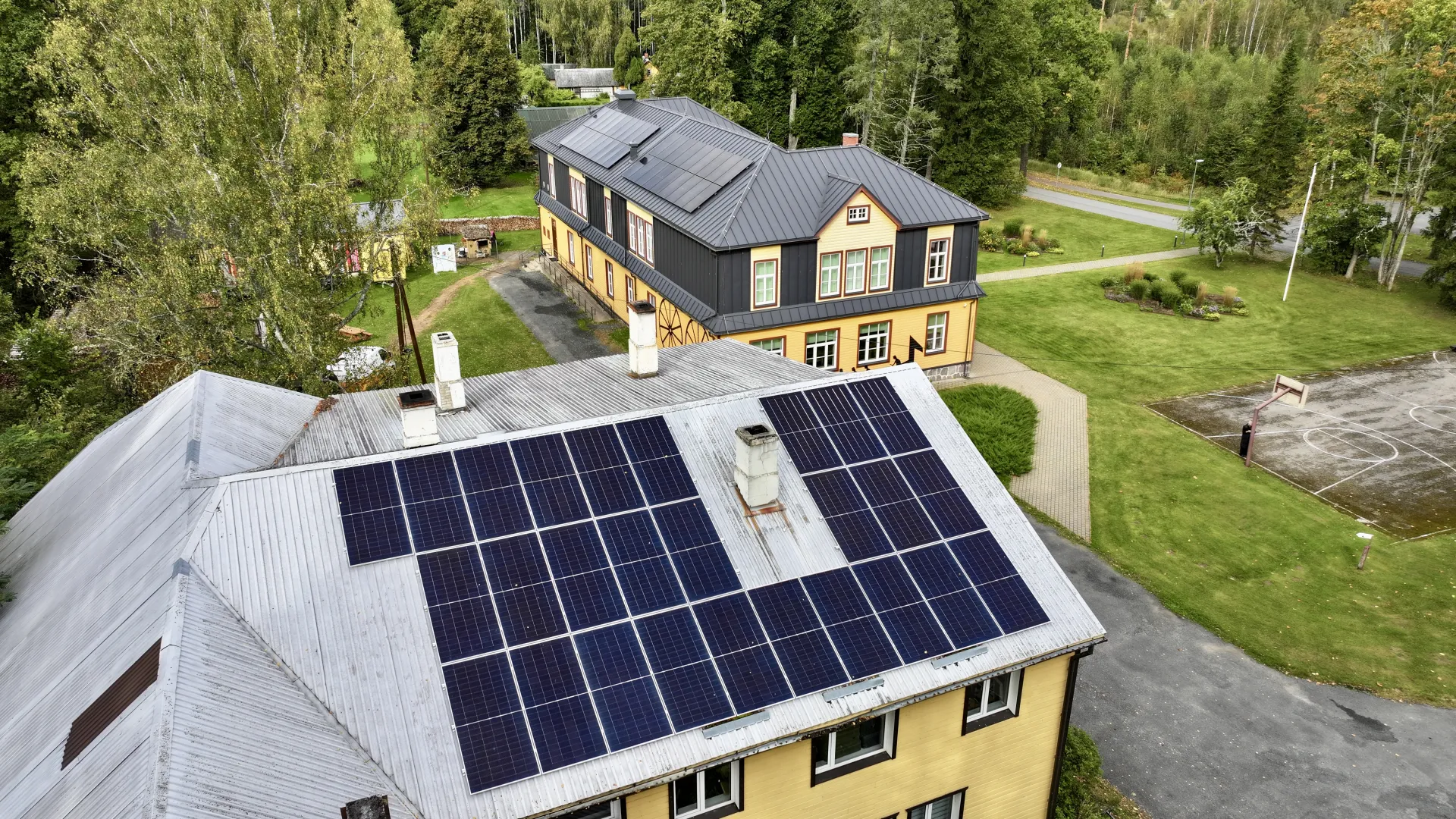
Kääpal arendatakse kohalikku energialahendust Kalevipoja Koja ümber.
Photo author: Laura Killak
